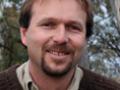
Phil Zylstra was interviewed on his research project on "Fire intensity and a total fuel model" at the 2010 Bushfire CRC annual conference in Darwin.
Plant species contribution to fire intensity – towards a total fuels model
The 5 year project, due to be completed at the end of 2008 is being conducted by the NSW National Parks and Wildlife Service in cooperation with the Bushfire CRC and the Australian Defence Force Academy. The study considers flammability at 4 levels:
- Particle flammability - the factors that control the ignitability, combustibility and sustainability of flame in leaves from different species, and how this is affected by soil moisture and weather conditions.
- Plant flammability - the conditions under which flame will propagate through a plant of a given species, and the flame produced by the burning plant.
- Forest flammability – a 3-dimensional model that works by defining the physical means by which fire can spread from one plant to another and produce horizontal fuel connectivity or complete a vertical fuel ladder.
- Landscape flammability – a risk management classification to quantify how many days of the year the bush will burn, how often this fire will be intense enough to pose a threat to assets, soils or biota, and how this value will change in the years following a fuel treatment.
Study methods include experimental fires and laboratory work, knowledge gathering from local graziers and the Bemeringal people.
Related News
Publications from this Project
Conference Proceedings
Associated Project
External References

Andrew Stark is a Bushfire CRC Lead End User and has used Phil Zylstra's research on fire and fuel models. He was interviewed at the Bushfire CRC 2010 annual conference.